
Xiamen becomes top air transit hub for fresh produce exports

Xiamen customs officials inspect the cargo. [Photo/Xiamen Daily]
A batch of 278 kilograms of yellow peaches from Yuncheng, Shanxi Province made its way to Singapore through an "air-to-air transit" model under the supervision of customs officers at Xiamen Gaoqi International Airport.
This marks the first time fruit from Shanxi has been exported to Southeast Asia via Xiamen's air cargo transit.
As of July 9, the volume of goods transported through Xiamen airport's "air-to-air transit" model has exceeded 5,000 metric tons this year, reaching 5,156.6 metric tons, marking a 5.87 percent increase year-on-year and setting a five-year high for the same period.
The "air-to-air transit" model refers to the shipment of air cargo via two or more connecting flights under customs supervision before it reaches its final destination. This approach is particularly suited for high-value and time-sensitive goods.
Freshness is value for fresh produce. Compared with traditional freight transportation, the "air-to-air transit" model can cut transit time by nearly half and reduce transportation costs by more than 10 percent.
As the largest aviation hub in Fujian, Xiamen airport connects to 16 major cities including Hangzhou in Zhejiang, Nanjing in Jiangsu, and Kunming in Yunnan, and serves over 20 countries and regions.
Why Xiamen
-
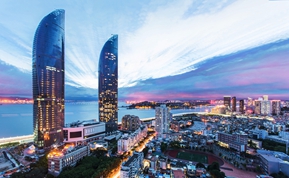
Xiamen is one of the most economically competitive cities in China and was one of the first Special Economic Zones on the Chinese mainland. As a vice-provincial city independently listed on the State development plan, it has provincial-level authority in economic administration and local legislative power. In 2010, the Xiamen SEZ was expanded to cover the entire municipality. Today, Xiamen is a modern and international port city.